
Okta
Title of the Talk :
Beyond Human Scalability: AI-Governed Access in the Era of Zero Standing Privilege
Abstract of Talk:
In large-scale enterprises with hundreds of thousands of employees, contractors, and external collaborators, enforcing Zero Standing Privilege has become a paradox: the more we eliminate static access, the more we overwhelm humans with access requests. Manual approval models don’t scale they slow down operations, erode accountability, and turn security into bureaucracy.
This keynote explores a new paradigm: AI-governed access, where intelligent systems evaluate access requests in real time, challenge users interactively, and escalate only when human oversight is truly needed. By blending automation, behavioral context, and adaptive risk scoring, organizations can move from human bottlenecks to human-in-the-loop assurance. Attendees will learn how AI-driven decision tiers can uphold security rigor, preserve auditability, and finally make Zero Standing Privilege operational at enterprise scale without burning out approvers or blocking innovation.
Brief Biodata:
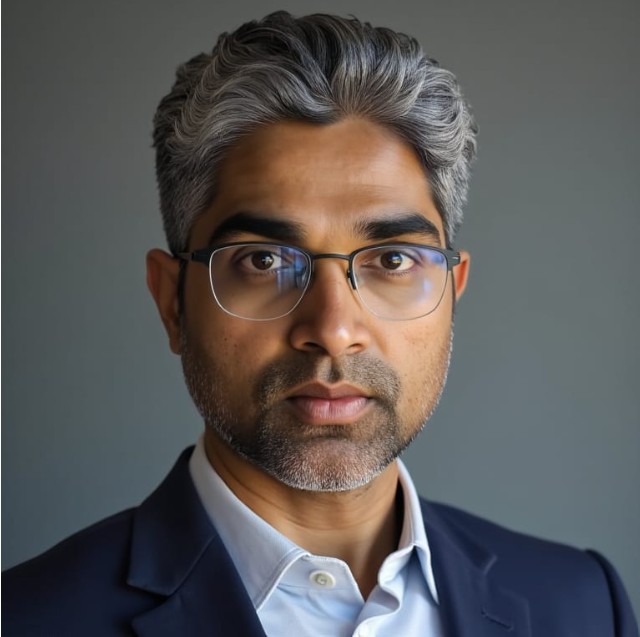
Nandagopal Seshagiri is a senior security architect and industry thought leader specializing in identity, access management, and trust architectures for large-scale cloud and AI systems. He currently works at Okta, where he has led and influenced initiatives spanning secure identity platforms, secrets management, zero-trust architectures, and governance for highly regulated environments.
With prior experience across global technology organizations and a portfolio of granted patents in security, data protection, and compliance enforcement, his work bridges deep technical rigor with real-world operational impact. Nandagopal is an active contributor to the global research and professional community through conference leadership roles, peer review, and invited talks, with a growing focus on securing autonomous and agentic AI systems.
His current interests center on trust, identity, and governance models for AI-driven infrastructure – exploring how security must evolve as intelligence itself becomes an active participant in decision-making.